Most grocery store food plants originate from a specific ecosystem type – recently opened land. When an area is cleared by fire, flood, or herds of animals, there is a brief window in time where there are abundant resources not yet taken by competing plants. Species evolved in these ecosystems focus on short-term goals – grow fast, reproduce quickly, and make a lot of babies.
These plants likely became connected with humans due to a combination of their traits and location. Since the earliest times, people were clearing land for living and hunting animals that opened land with grazing and trampling. This means that many of the plants that grow near people are (and always have been) these weedy short-lived species. Anyone traveling a trail would collect these plants as snacks to fuel their moving bodies. Scientists believe that before too long, people were intentionally putting some of the seeds of their favorite plants back into the soil to improve the amount of food present in the landscape.
The short-lived nature of these plants also makes them extra fit for gardening potential. Unlike long-lived species like trees that spends many years growing themselves, a weedy plant will typically invest most of its energy into producing leaves to fuel growth, and then produce fat fertile seeds as quickly as possible. The plant is under the assumption that it will soon die as the other long-lived species fill back in the open space – so it must finish its life cycle as quickly as possible. These seeds typically are programmed to start growing as soon as they sense moist healthy soil. This means these plants quickly produce food for people, and also produce seeds that are very easy to collect and grow in gardens.
These easy traits have led so called ‘open field agriculture’ to be prioritized in our ways of living. Plants that complete their life cycle in a year are easy to breed into specific varieties. Ground that stays open is an easy place to drive a tractor. Land that stays cleared is easy to manage. People around the world have continued to invest tons and tons of energy into this type of food production because it fits best into their cultures and economies of food production.
Ask any gardener how to produce food – and without intending to, they’ll describe the steps that people took millennia ago
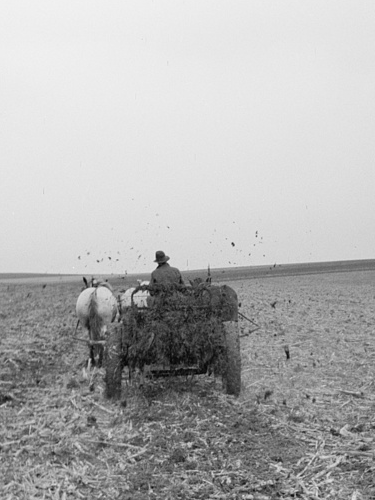
The modern world has a way of narrowing our focus. Especially now in an era of mass production. Ask any gardener how to produce food – and without intending to, they’ll describe the steps that people took millennia ago – you clear land (as if for putting up a camp) add fertilizer like manure (which large game animals would be dropping everywhere) and then put in the seeds (that were once carried with people along trail routes) and weed out any undesired plants that pop out of the soil.
But there are plenty of ways to live on land, and ways to get food while you’re there. When your only tool is a hammer every problem looks like a nail. When the only way to produce food is a veggie garden, then every bit of land looks like a veggie plot waiting to be developed.
How Soil Works
Soil is a living ecosystem, dirt is the place the ecosystem operates in. Deep underground bedrock forms what’s called the parent material which is crushed up over thousands of years to form a kind of rock-flour we call dirt. Depending on how finely ground those rocks are, you get different soil textures. The most fine corn-starch like rock powders are called clay, less finely crushed is called silt, and the most coarsely ground like cornmeal is called sand. These textures have enormous impacts on the ways soils behave.
Dirts formed from different kinds of rocks will have different properties and mineral compositions. For example – if the local bedrock is limestone, that limestone will make a dirt that has an alkaline ph (more like baking soda than like vinegar) and have high amounts of calcium available to plants.
Because soil is the ecosystem made in dirt, the organisms that complete their life cycles impact and change the soil over time. As plants grow, they release a liquid called exudate from their roots. This is a highly nutritious mix of sugars and minerals. The exudates are eaten by bacteria and fungi. Plants can support specific species by changing what’s in their exudates. The area around the roots where all of this happens is called the rhizosphere. Over time, the rhizosphere becomes one of the largest contributors to soil structure.
Dirt is a common name for soil without life. Dirt is dusty and dry. When dirt starts being filled with life, the qualities begin to change. A major shift is the formation of clumps of dirt known as aggregates. These often look and feel a lot like bread crumbs. Soil is able to stick together to form these aggregates because of a special slimes and glues, where tiny organisms like bacteria and fungi live and grow. These microorganisms grow in the soil by feeding on root exudate or dead things that got buried – that means that both living and dead plants contribute towards soil developing these aggregations.
Aggregates help maintain open spaces throughout the soil. This allows air and water to move freely up and down, which is essential for drainage and reducing erosion. These gaps also allow plants to send roots into the soil very easily – making plants that have small weak roots (like many annual veggies) have improvements in their growth.
The rhizosphere doesn’t just contain these slimes of bacteria and fungi. There are also predators like nematodes that move around the soil to hunt microorganisms. When these predators poop it becomes a highly nutritious fertilizer for plants that’s absorbed in their roots, further improving health and vigor.
Fungi in the soil operate a little bit differently than bacteria. The slime where bacteria lives is known as a biofilm, which is a greasy thin layer where tremendous amounts of activity takes place, naturally holding dirt together into little slimy crumbs. Fungi meanwhile send out root-like structures (called hyphae) deep inside the soil and glue their own aggregations with a sticky substance called glomalin. This means that both fungi and bacteria can cause soil to clump together in helpful ways – they just use different methods to do so.
There is a secondary bonus to having fungi around- they can use their special hyphae to reach around soils looking for minerals. This is so helpful that most plants have co-evolved with fungi. Rather than trying to find their own minerals, they link up with fungi and send them food in the form of sugary root exudate in exchange for minerals given back by the fungi.
Bacteria and fungi are both present in the soil, but the relative amounts of either vary based on the way the soil is managed. When we dig or plow up soil very often, we break the tiny fungal roots and make lots of space for bacteria to grow. Meanwhile, soil that’s full of dead things but not dug up often (like in piles of leaves in a forest) develops dense fungi and less bacteria.
This means that most open field agriculture has soils with much more bacteria, while orchards and forests generally have more fungi. This is why many popular mushrooms are more common in woods rather than fields.
Narrowing of the Way
There are many interesting publications on alternative methods of growing food. Cattails, hickory nuts, sunchoke, and other plants were being researched by cutting edge farmers and food scientists to try and feed the people. These publications began to fall away in the 1930’s, and were basically gone by the 1960’s. This is due to a simple reason – the development of synthetic nitrogen.
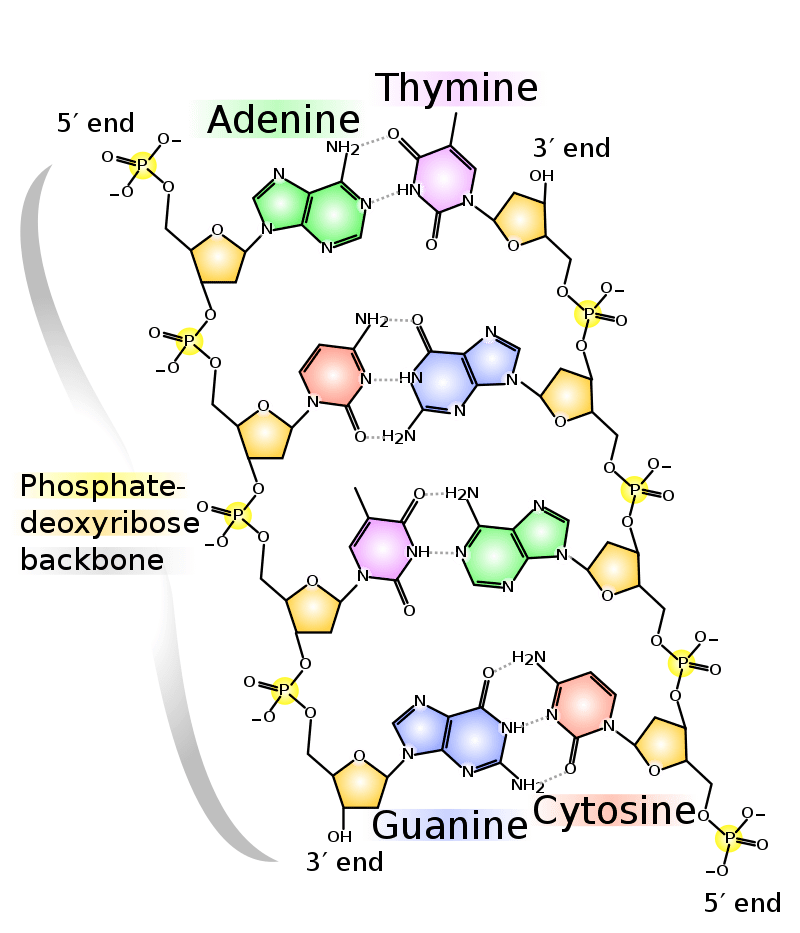
Plants require many vitamins and minerals to grow healthy and strong. But nitrogen is among the most essential and difficult to acquire in nature. Nitrogen is one of the elements that’s used to build protein. Everything from DNA to muscles to seeds require protein to be built, and so nitrogen is essential from the very beginning to form a living body – be it a plant, a person, or a bacteria.
The majority of our atmosphere (70%) is actually made of nitrogen, but this gas isn’t raw usable nitrogen. The atoms are glued tightly together into pairs (called N2 or dinitrogen) which make them chemically ‘dead’ and unusable in living system. There are only 2 ways in nature that the nitrogen pairs are ripped apart (known as nitrogen fixation) – lightning blasting the molecule apart, and when a very specialized enzyme (a molecule made by living things that breaks particles apart) called nitrogenase is mixed with the N2.
In both of these cases the nitrogen is quickly glued together with other atoms to keep it stable, rather than letting it turning back into N2 by bonding together with another nitrogen. When lightning blasts nitrogen apart, the oxygen in the atmosphere quickly bonds to form nitrogen oxides. Nitrogenase uses hydrogen and forms ammonia. Both nitrogen oxide and ammonia can be used by life forms.
Some specialized bacteria naturally produce nitrogenase and so can live just off of the abundant dinitrogen in the atmosphere as their nitrogen source. When these bacteria die, their bodies contain their ammonia in all of their cellular components. When they break down and are eaten, the ammonia is spread into other living things.
Most plants on earth pull the nitrogen they need from the soil. But some plants found a more reliable source – they produce swellings on their roots called nodules where nitrogen fixing bacteria live. These nodules are a fair trade between species – the bacteria produces extra ammonia in exchange for sugar provided by the plant. The most well known plants that have root nodules are the members of the bean and pea families. To ensure nitrogen-fixing bacteria reach the nodules of bean plants it’s recommended that an ‘innoculant‘ containing the bacteria be added to the soil.
As a plant matures and builds its body out of nitrogen, it eventually either dies and becomes part of the soil (where it releases the nitrogen back into the soil) or gets eaten. When animals eat nitrogen it either becomes part of their own bodies, or it’s excreted out as poop or pee. When the animal dies, just like plants the remaining nitrogen returns to the soil as the body breaks down. This makes nitrogen a cycle – once the nitrogen is fixed by bacteria or lightning, it cycles up through plants, is sometimes eaten by animals, and then eventually comes back into the soil. Little by little the total nitrogen in the soil increases as bacteria continue to fix more and more nitrogen from the atmosphere.
This means that on farms, the total amount of food produced is limited by how much nitrogen is present. The more you grow dense food plants (like corn, wheat, rice, and other staple foods), the more nitrogen you are drawing out of the soil to be eaten. That’s why farms are always putting down fertilizer like manure – it’s taking the nitrogen eaten by livestock and putting it back down in their poop. Very ‘fertile’ soils start out with a very big cycle, with a lot of nitrogen already available. ‘Barren’ soils in contrast have a very small cycle with very little nitrogen – and thus aren’t able to support big harvests every year of typical crops.
This means that on farms, the total amount of food produced is limited by how much nitrogen is present. The more you grow dense food plants (like corn, wheat, rice, and other staple foods), the more nitrogen you are drawing out of the soil to be eaten. That’s why farms are always putting down fertilizer like manure – it’s taking the nitrogen eaten by livestock and putting it back down in their poop. Very ‘fertile’ soils start out with a very big cycle, with a lot of nitrogen already available. ‘Barren’ soils in contrast have a very small cycle with very little nitrogen – and thus aren’t able to support big harvests every year of typical crops.
Traditional farming systems used crop rotation, which changed the crops grown in a multi-year cycle. The most effective rotation systems included some years where nitrogen-fixing crops were grown, and others where animals were moved onto the soil to add manure to the soil. This process that kept nitrogen cycles intact, and slowly built the cycle up through the use of nitrogen fixing plants.
Before we knew how to make our own fertilizer, ammonia was a very very precious substance. This is because when ammonia was applied to soils, it suddenly boosted the nitrogen cycle much higher – massively increasing yields in a field. Manure was sold (even manure from humans called ‘night soil‘) as a commodity for its rich source of nitrogen. Sailors who discovered islands populated by sea birds became rich overnight – because those rocks were covered in bird poop (known as ‘guano‘) that could be mined like gold. Wars were fought over these islands to preserve different countries’ access to nitrogen.
Sailors who discovered islands populated by sea birds became rich overnight – because those rocks were covered in bird poop (known as ‘guano‘) that could be mined like gold.
As the human population continued to increase, there were fears that we would eventually be unable to feed everyone. This is because even with the addition of guano from islands, there was a finite amount of nitrogen available on earth, and nitrogen-fixing bacteria can only add nitrogen to the earth very slowly. Crop fields began to hit a ceiling of productivity that was feared to eventually be the upper limit of food production.
In the 19th and early 20th century as this ceiling began to feel more frightening, many food scientists and farmers began exploring alternate foods and crops that could be used to feed people outside of the traditional field model. One such example is a 1919 study where the wetland cat tail plant was investigated as a source of flour. The author continually describes how this flour could be added to wheat flour for breads and desserts, and highlights how acres and acres of this plant could be harvested for human food. This (in our opinion) shows the level of fear and desperation that were increasingly the norm of the food system in this time period.
This is the moment when thunder struck. In 1913 German chemists Fritz Haber and Carl Bosch found a way to fix nitrogen in a laboratory environment which was then named the Haber-Bosch process in their honor. World war I broke out a year later, and this chemical breakthrough allowed Germany to produce gunpowder (which requires ammonia) despite not having access to guano. Fritz Haber then went on to use his chemical expertise to develop poison chlorine gas to kill enemy troops, which (without his involvement) was later adapted into Zyklon-B, killing millions in the Holocaust. This makes these chemists and their ammonia-synthesis process a symbol of both life and death.
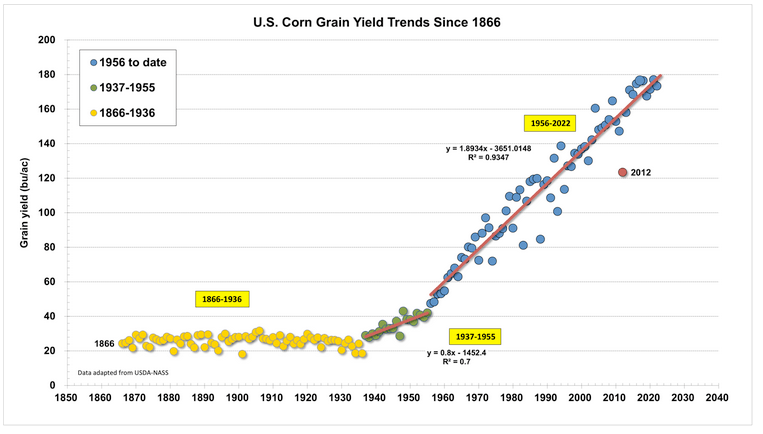
The Haber-Bosch process revolutionized life on earth. By burning natural gas they were able to produce a synthetic form of ammonia. Food production accelerated around the world. Every graph that shows agricultural yields has a distinct ‘before’ and ‘after’ you can point to – which is the moment that the synthetic fertilizer process became available. This turning point is known as the Green Revolution, and signifies the moment when modern crop breeding and synthetic nitrogen produced more food than our ancestors could have ever imagined.
As the green revolution continued its march of progress, the prior research into alternate food systems began to die away. Little by little the funding began to dry up. The cattail flour research and its siblings became obsolete. Those who studied these plants at a professional capacity are now either retired or dead, and their knowledge exists as old photocopies in the back of research libraries and labs
This is unfortunate, and should bring fear into our hearts. Because there are several facts we didn’t highlight before:
This means that if the fossil fuels are unavailable for fertilizer production, the conditions for farming fundamentally change, or we adapt our farming systems to be sustainable, global food supplies would drop rapidly.
We’ve spent all this text lining you up to absorb this fact – the so called obsolete research topics we abandoned a century ago could be methods of vital importance. So too could be the Indigenous food systems that operated (and continue to operate) outside of the existing industrial models of food production. The path of farming has been narrowed to one with high production, but high fragility – it depends on certain unsustainable chemicals, and erodes our ability to operate without them through soil damage.
 Thriving in Scarcity : A book about living well in hard times
