As described in prior chapters, plants adapted to live in flooded soils are specially evolved to carry oxygen with them. This is typically done by making special air filled channels running up and down the plant called Aerenchyma that operate like snorkels. Garden veggies lack these structures and thus drown in waterlogged soils. But plenty of essential food plants (though many are less common in grocery stores) have these traits and thrive in wetlands.
Rice Paddies
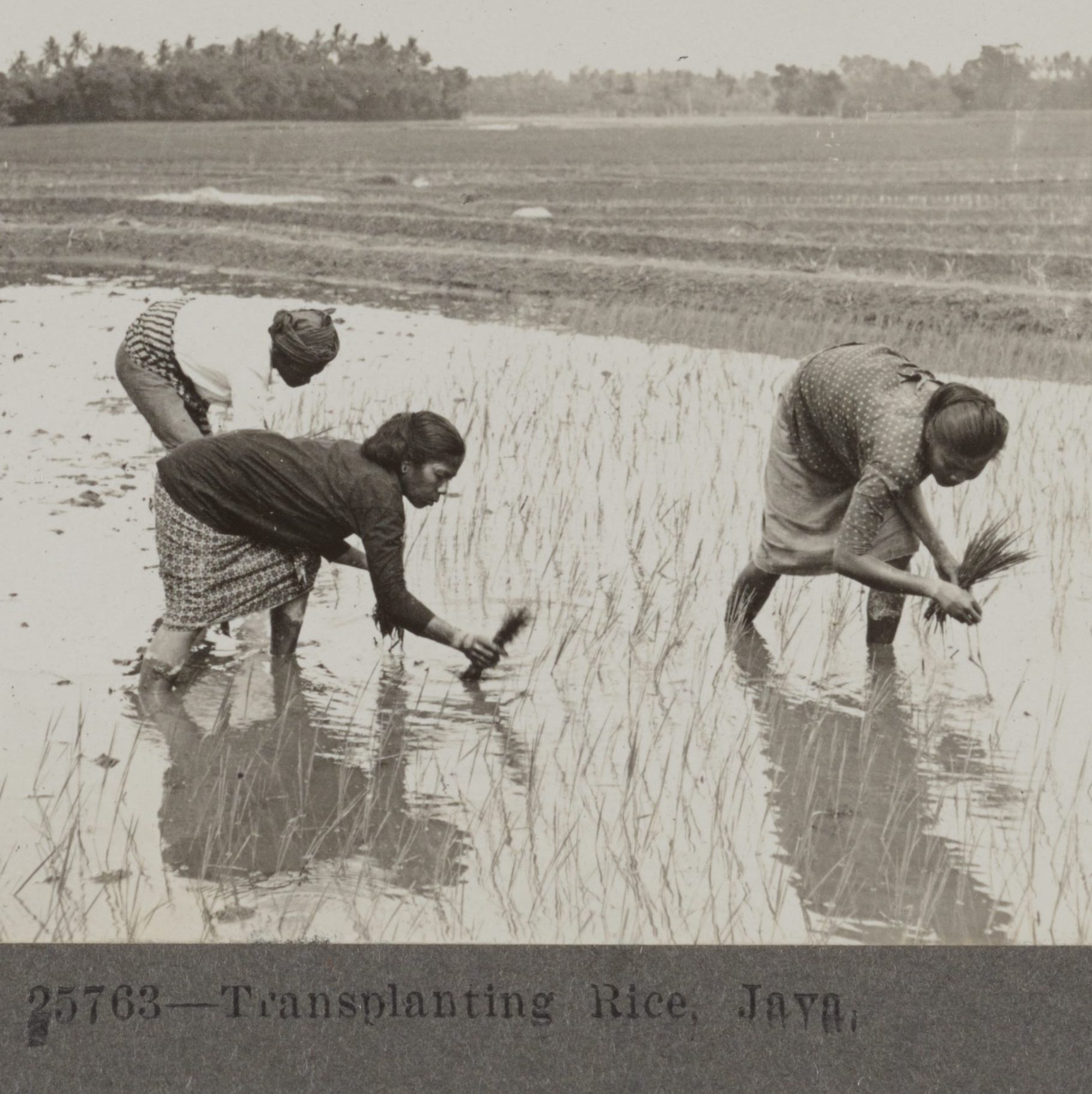
The most well known wet method of farming is known as a paddy system. These are farm fields which are kept flooded for some or all of the growing season. The main food plants used in paddy systems are rice, and taro. Both of these plants are ‘facultative‘, meaning they can live in both wet or dry conditions. Facultative plants are well suited to paddy growing because the fields can be flooded or drained depending on the needs of the farmer. Paddy crops usually start as a dry field which is then flooded, kept flooded during the growing season,and then drained before harvest. These conditions maximize growing facultative plants because dry and wet soil specialists die as their environment is flooded and drained. Some farmers in North America have begun experimenting with paddy systems in crop fields now flooded more often due to climate change.
In South Asia rice is grown as a Kharif crop, which is a plant grown during the monsoon season. Monsoon rains keep paddy fields flooded without people having to bother with complex irrigation systems.
Paddies naturally mimic wetlands which are flooded for most of the year. Other wetland systems have flooding for part of the year, or only occasionally when rivers overflow. These drier conditions may or may not be classified as a wetland ecosystem depending on if the flooding is frequent enough to result in changes to the soil and plant communities.
Camas and Hopniss
Beavers often produce floodplain ecosystems with few trees – their dams flood out trees that are not adapted to grow in wetlands before draining, leaving wet open fields. These may transition between non-wetlands, into a wetland during the flood years, before slowly switching back into a non-wetland. Wetlands which don’t drain can sometimes begin to fill with moisture-adapted trees like the river birch which can survive several weeks of standing water, but it takes many years to become filled with mature woods again.
Humans can also maintain open landscapes that resemble beaver-created field by applying fire periodically.
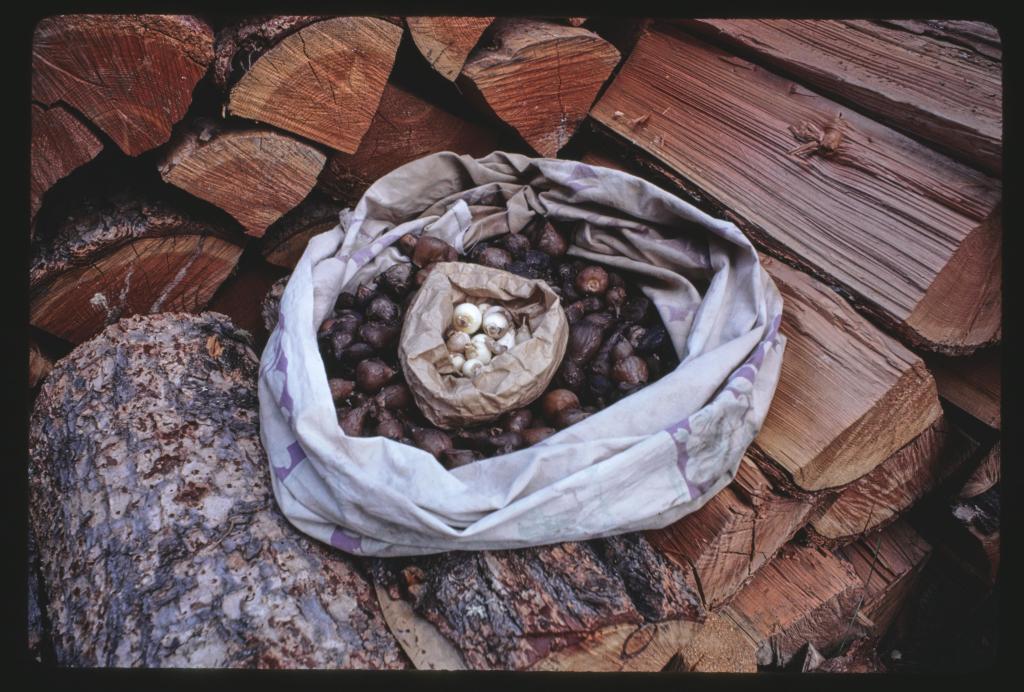
Image of Agnes Vanderburg’s camas collection on the Flathead Indian Reservation via Library of Congress
Camas is one of the significant food plants of these wet open landscapes. Although species of the plant exist across North America, the people of the northwest have developed the deepest skills in their use and care of the camas beds. Many Salish-speaking nations have both historic and contemporary camas fields, often managed by flooding and fire, which families return to again and again to harvest bulbs. Roots are planted back during harvesting, which enables a sustainable agricultural system in a wild space.
The sweetness of camas is often remarked upon. This highlights one aspect of traditional foods often ignored – how delicious they are. Indigenous people recovering their traditions and those working alongside them, describe the caramel pear-like flavors of long-cooked camas. It’s easy for folks eating from grocery stores to assume that these dishes are old famine foods, instead of entire culinary traditions worth valuing and caring for as living culture.
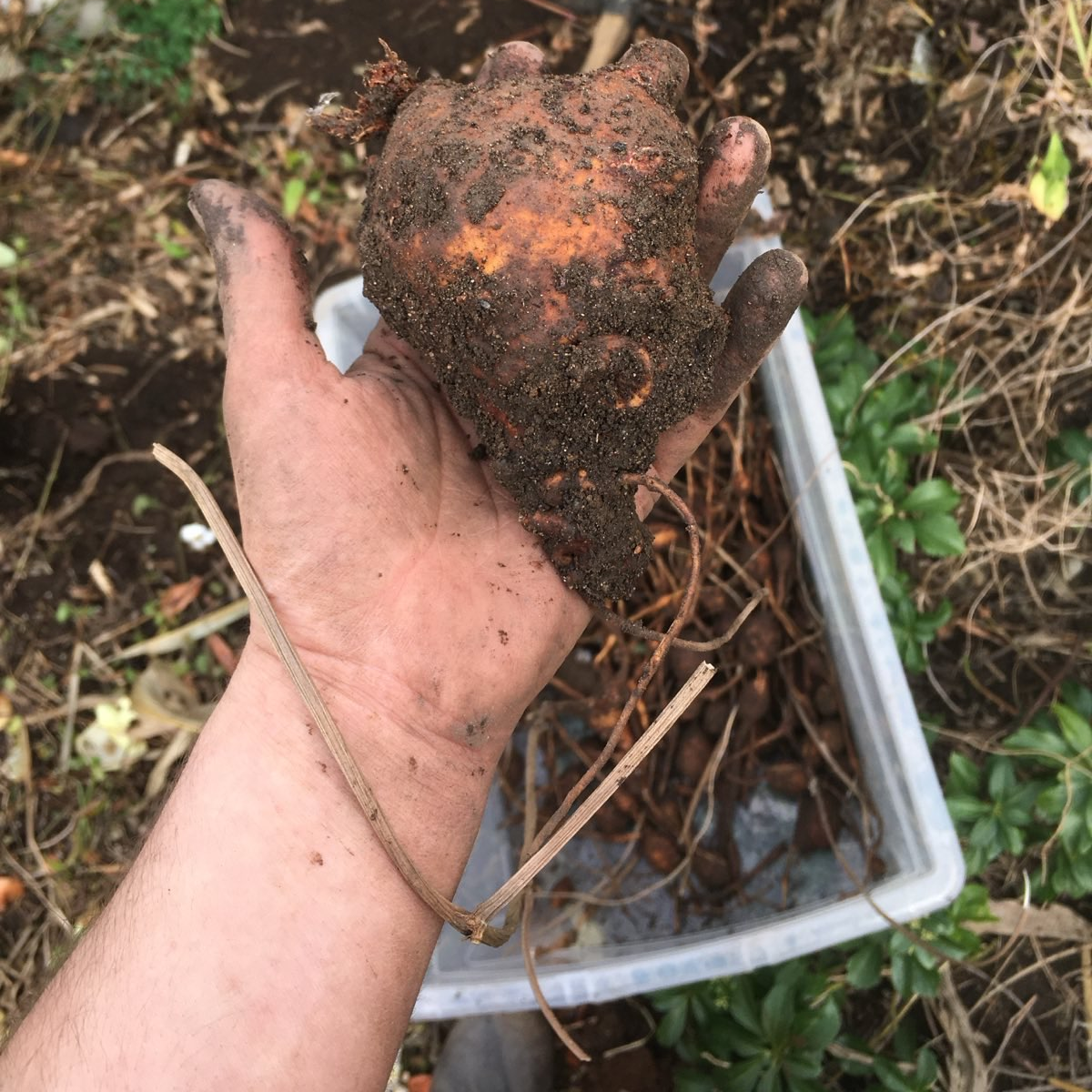
Hopniss (Apios americana) similarly is a root vegetable, but has the deepest relationships with people in the eastern woodlands. Also called ground nut or earth pea, Apios are a perennial vining species of bean. They produce large underground tubers that are strung together like beads on a necklace. These tubers contain about three times the protein of a potato and can be dug up at any point in the year. When the root is broken into sections, each piece will grow into a new plant, making it easy to harvest, divide, and plant back to regrow. This pattern of harvest and replanting is common in the wild tending practices of this continent, as we also saw with Camas.
Hopniss loves moist soil. It’s typically found along river banks and lowlands, especially ones with a lot of sunlight where it can thrive. We’ve found remnant populations in wetlands taken over by invasive reeds – but also in garden beds near former Indigenous pathways and settlements where it’s fought by annoyed gardeners as it climbs in their roses.
As a member of the bean family, apios is able to fix nitrogen through root nodules. This makes it readily grow in even low-fertility environments. Cranberry bogs are naturally low-nitrogen and co-occur in hopniss territories. This has led annoyed cranberry farmers to note with great concern how heavy the weed pressure can be from these wild beans. Plowing and mixing the soil only makes things worse by breaking the tubers apart and therefore increasing the total number of plants. The prioritization of the cranberry as a single cash crop to be maximized has meant that this secondary historic staple crop is seen as a pest and waste product.
Historic records are difficult to find on Apios. The eastern peoples were removed from their lands before those further west during the earlier periods of the genocide. In our experience it has made the accounts of their plant use and landscape care methods harder to track down in the written online record, but we assume the oral histories are just as complete. This forcible displacement is evident in the stories we do have. Fleeing Indigenous peoples were tracked by colonists trying to murder them, by following the earth dug up for hopniss tubers. Although Apios was eaten at the first thanksgiving when members of the Wampanoag Nation rescued the pilgrims from starvation by sharing their own stored foods, laws in the colonies would later outlaw harvest of the roots by Indigenous people, with punishment by public whipping.
To this day the northern range appears to be composed of sterile variants of hopniss that cannot reproduce by seed. In the current landscape they spread incredibly slowly, as they can only move by growing tubers into the soil.
Notably there was a system transcontinental pathways used by people for millennia to travel distances short and long – a person could walk from ocean to ocean along the great paths. This pathway system has since been carved up by the political boundaries declared by the states, and destroyed and paved over to make the US highway system. One has to wonder how many of these northern hopniss tubers were spread by travelers of the pathways. It’s staggering to bear witness to how much generosity and ease has been eroded from the landscape.
Freshwater Tubers – Wapato, Lotus
In parts of North America where wetlands exist, people have historically used them as a major source of food. Wapato (also known by Katniss or Arrowhead) (Sagittaria latifolia) is a small flowering plant with nutritious tubers which both historically and in the present day is a vital food plant to the Indigenous nations. When Europeans first visited Indigenous settlements they described people walking into neck deep water to harvest Wapato and Lotus roots. Modern researchers have found that a wapato wetlands are suitable as staple crops to support communities, based on both historic lifeways of Indigenous cultures and current yield data.
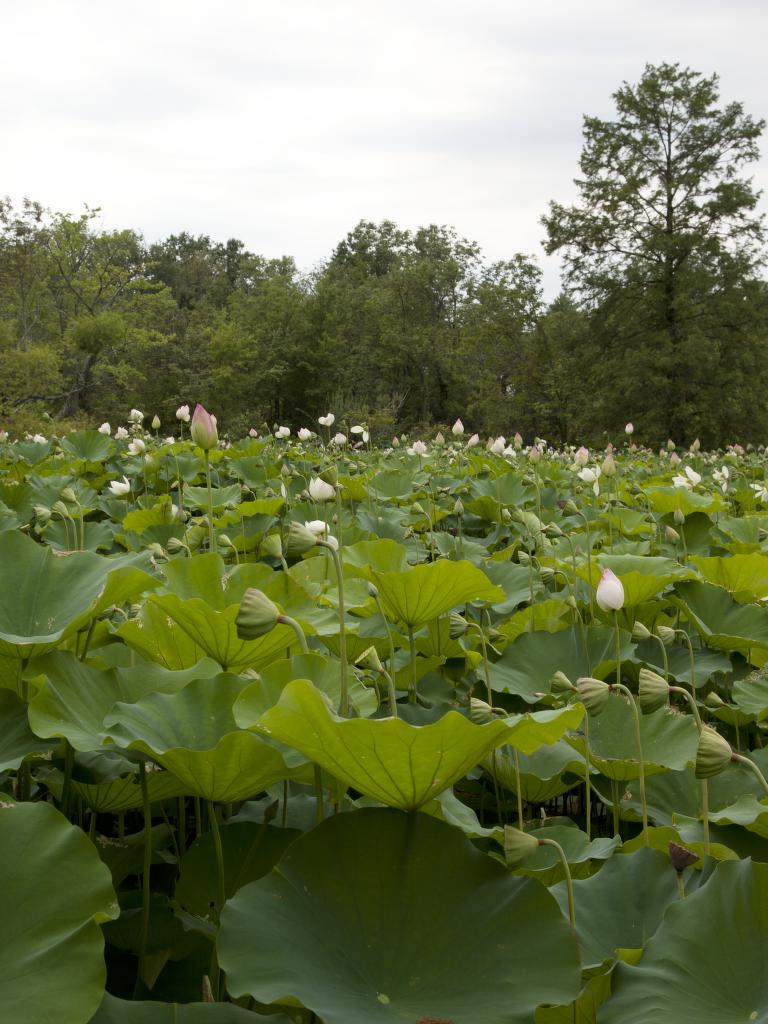
We’ve found native lotus (Nelumbo lutea) to be another important food but less well referenced in internet sources compared to other plants.
One account from the early 20th century via a non-Indigenous ethnobotanist describes the process used by people of the Pawnee Nation for harvesting the root tubers.
People would walk along the lotus beds when waters lowered in late summer feeling for the tubers with their bare feet, they’d then scrape the mud away with their feet and use a hooked stick to pull up the roots. These would then be eaten, and some sliced into 1″ rings to dry for winter use.
One source claims that some of the lotus beds of Iowa came from the Ho-Chunk people in the late 19th century, who brought the food plant with them as they were forcibly relocated from their homelands.
The lotus has an odd fragmented distribution on this continent. It’s also known to grow at an enormous pace – six plants filling an acre within a single growing season. East Asia has a similar climate and ecological community to eastern North America with often mirrored foodways, and a local species of lotus in China is part of a crop rotation in rice paddies. These points in combination with the Ho-Chunk account leads us to believe that the plant was intentionally moved by people into regional freshwater ponds for harvesting as an agricultural food crop. But actual oral histories and living examples would be the best source to confirm or deny this belief.
Manoomin
In the deep waters of the great lakes, Manoomin (also called wild rice / Zizania – but not closely related to grocery store rice) plays a role of profound religious and practical significance. The Anishanaabe people land extends around the great lakes, but their oral histories describe their original home as being the east coast. Their migration was the result of a prophesy from their elders saying to move westward to preserve their way of life, where food could be found growing on the water.
We’d also like to raise up the work of the White Earth Band who recognized the legal rights of the Manoomin plant, and are the first who brought those rights to a tribal court. Their work is protecting the waters and the ecosystems of the entire midwestern region. You can purchase sustainably harvested wild rice directly from the white earth band here.
Speaking just on the plant itself, wild rice grows in freshwater bodies of the east. Although it’s primarily known for the populations in the great lakes and smaller ponds and lakes of the northeast, there are species that extend down through Florida and Texas. Manoomin does not tolerate ocean salts, pollution, or fast-flowing water. It needs clean still waters. Harvests happen in the fall where a canoe can slip into the lake waters between the rice plants, and then the stalks are beaten to free the ripe seeds. These fall into the bottom of the canoe where they can later be processed on land. This processing is quite laborious and includes continuously stirring rice in a hot cook-pot, physically breaking the hulls off the grains, and winnowing the hulls away. It’s a demanding process, but one that sustains communities.
Manoomin’s presence as a food source in lake waters make it an excellent resource for people. Lakes – especially in the midwest – are enormous, unused for human housing and farming, and can be left mostly alone throughout the growing season to manage themselves (though it’s worth remembering that like all lands and waters, these areas are tended to to maintain health and productivity).
Although a much lower density calorie source compared to typical crops like corn, large rice waters can be quickly traversed and collected through canoes and skilled harvesters. This makes a ten acre rice water more like a one acre crop field on land in terms of human time and effort. Especially when we consider that open waters aren’t suitable for other crops, this makes rice a significant food asset in lake ecosystems.
 Thriving in Scarcity : A book about living well in hard times