Note: this page heavily features accounts of Indigenous Nations and both their historical and continued use of food plants. If you are a member of a Nation or have loved ones who are, and want to correct or add to anything we wrote, please feel free to reach out. We’d prefer the people of the Indigenous Nations to speak for themselves whenever possible.
Open Field Agriculture
Most grocery store food plants originate from a specific ecosystem type – recently opened land. When an area is cleared by fire, flood, or herds of animals, there is a brief window in time where there are abundant resources not yet taken by competing plants. Species evolved in these ecosystems focus on short-term goals – grow fast, reproduce quickly, and make a lot of babies.
These plants likely became connected with humans due to a combination of their traits and location. Since the earliest times, people were clearing land for living and hunting animals that opened land with grazing and trampling. This means that many of the plants that grow near people are (and always have been) these weedy short-lived species. Anyone traveling a trail would collect these plants as snacks to fuel their moving bodies. Scientists believe that before too long, people were intentionally putting some of the seeds of their favorite plants back into the soil to improve the amount of food present in the landscape.
The short-lived nature of these plants also makes them extra fit for gardening potential. Unlike long-lived species like trees that spends many years growing themselves, a weedy plant will typically invest most of its energy into producing leaves to fuel growth, and then produce fat fertile seeds as quickly as possible. The plant is under the assumption that it will soon die as the other long-lived species fill back in the open space – so it must finish its life cycle as quickly as possible. These seeds typically are programmed to start growing as soon as they sense moist healthy soil. This means these plants quickly produce food for people, and also produce seeds that are very easy to collect and grow in gardens.
These easy traits have led so called ‘open field agriculture’ to be prioritized in our ways of living. Plants that complete their life cycle in a year are easy to breed into specific varieties. Ground that stays open is an easy place to drive a tractor. Land that stays cleared is easy to manage. People around the world have continued to invest tons and tons of energy into this type of food production because it fits best into their cultures and economies of food production.
The modern world has a way of narrowing our focus. Especially now in an era of mass production. Ask any gardener how to produce food – and without intending to, they’ll describe the steps that people took millennia ago – you clear land (as if for putting up a camp) add fertilizer like manure (which large game animals would be dropping everywhere) and then put in the seeds (that were once carried with people along trail routes) and weed out any undesired plants that pop out of the soil.
But there are plenty of ways to live on land, and ways to get food while you’re there. When your only tool is a hammer every problem looks like a nail. When the only way to produce food is a veggie garden, then every bit of land looks like a veggie plot waiting to be developed.
How Soil Works
Soil is a living ecosystem, dirt is the place the ecosystem operates in. Deep underground bedrock forms what’s called the parent material which is crushed up over thousands of years to form a kind of rock-flour we call dirt. Depending on how finely ground those rocks are, you get different soil textures. The most fine corn-starch like rock powders are called clay, less finely crushed is called silt, and the most coarsely ground like cornmeal is called sand. These textures have enormous impacts on the ways soils behave.
Dirts formed from different kinds of rocks will have different properties and mineral compositions. For example – if the local bedrock is limestone, that limestone will make a dirt that has an alkaline ph (more like baking soda than like vinegar) and have high amounts of calcium available to plants.
Because soil is the ecosystem made in dirt, the organisms that complete their life cycles impact and change the soil over time. As plants grow, they release a liquid called exudate from their roots. This is a highly nutritious mix of sugars and minerals. The exudates are eaten by bacteria and fungi. Plants can support specific species by changing what’s in their exudates. The area around the roots where all of this happens is called the rhizosphere. Over time, the rhizosphere becomes one of the largest contributors to soil structure.
Dirt is a common name for soil without life. Dirt is dusty and dry. When dirt starts being filled with life, the qualities begin to change. A major shift is the formation of clumps of dirt known as aggregates. These often look and feel a lot like bread crumbs. Soil is able to stick together to form these aggregates because of a special slimes and glues, where tiny organisms like bacteria and fungi live and grow. These microorganisms grow in the soil by feeding on root exudate or dead things that got buried – that means that both living and dead plants contribute towards soil developing these aggregations.
Aggregates help maintain open spaces throughout the soil. This allows air and water to move freely up and down, which is essential for drainage and reducing erosion. These gaps also allow plants to send roots into the soil very easily – making plants that have small weak roots (like many annual veggies) have improvements in their growth.
The rhizosphere doesn’t just contain these slimes of bacteria and fungi. There are also predators like nematodes that move around the soil to hunt microorganisms. When these predators poop it becomes a highly nutritious fertilizer for plants that’s absorbed in their roots, further improving health and vigor.
Fungi in the soil operate a little bit differently than bacteria. The slime where bacteria lives is known as a biofilm, which is a greasy thin layer where tremendous amounts of activity takes place, naturally holding dirt together into little slimy crumbs. Fungi meanwhile send out root-like structures (called hyphae) deep inside the soil and glue their own aggregations with a sticky substance called glomalin. This means that both fungi and bacteria can cause soil to clump together in helpful ways – they just use different methods to do so.
There is a secondary bonus to having fungi around- they can use their special hyphae to reach around soils looking for minerals. This is so helpful that most plants have co-evolved with fungi. Rather than trying to find their own minerals, they link up with fungi and send them food in the form of sugary root exudate in exchange for minerals given back by the fungi.
Bacteria and fungi are both present in the soil, but the relative amounts of either vary based on the way the soil is managed. When we dig or plow up soil very often, we break the tiny fungal roots and make lots of space for bacteria to grow. Meanwhile, soil that’s full of dead things but not dug up often (like in piles of leaves in a forest) develops dense fungi and less bacteria.
This means that most open field agriculture has soils with much more bacteria, while orchards and forests generally have more fungi. This is why many popular mushrooms are more common in woods rather than fields.
Narrowing of the path
There are many interesting publications on alternative methods of growing food. Cattails, hickory nuts, sunchoke, and other plants were being researched by cutting edge farmers and food scientists to try and feed the people. These publications began to fall away in the 1930’s, and were basically gone by the 1960’s. This is due to a simple reason – the development of synthetic nitrogen.
Plants require many vitamins and minerals to grow healthy and strong. But nitrogen is among the most essential and difficult to acquire in nature. Nitrogen is one of the elements that’s used to build protein. Everything from DNA to muscles to seeds require protein to be built, and so nitrogen is essential from the very beginning to form a living body – be it a plant, a person, or a bacteria.
The majority of our atmosphere (70%) is actually made of nitrogen, but this gas isn’t raw usable nitrogen. The atoms are glued tightly together into pairs (called N2 or dinitrogen) which make them chemically ‘dead’ and unusable in living system. There are only 2 ways in nature that the nitrogen pairs are ripped apart (known as nitrogen fixation) – lightning blasting the molecule apart, and when a very specialized enzyme (a molecule made by living things that breaks particles apart) called nitrogenase is mixed with the N2. In both of these cases the nitrogen is quickly glued together with other atoms to keep it stable, rather than letting it turning back into N2 by bonding together with another nitrogen. When lightning blasts nitrogen apart, the oxygen in the atmosphere quickly bonds to form nitrogen oxides. Nitrogenase uses hydrogen and forms ammonia. Both nitrogen oxide and ammonia can be used by life forms.
Some specialized bacteria naturally produce nitrogenase and so can live just off of the abundant dinitrogen in the atmosphere as their nitrogen source. When these bacteria die, their bodies contain their ammonia in all of their cellular components. When they break down and are eaten, the ammonia is spread into other living things.
Most plants on earth pull the nitrogen they need from the soil. But some plants found a more reliable source – they produce swellings on their roots called nodules where nitrogen fixing bacteria live. These nodules are a fair trade between species – the bacteria produces extra ammonia in exchange for sugar provided by the plant. The most well known plants that have root nodules are the members of the bean and pea families. To ensure nitrogen-fixing bacteria reach the nodules of bean plants it’s recommended that an ‘innoculant‘ containing the bacteria be added to the soil.
As a plant matures and builds its body out of nitrogen, it eventually either dies and becomes part of the soil (where it releases the nitrogen back into the soil) or gets eaten. When animals eat nitrogen it either becomes part of their own bodies, or it’s excreted out as poop or pee. When the animal dies, just like plants the remaining nitrogen returns to the soil as the body breaks down. This makes nitrogen a cycle – once the nitrogen is fixed by bacteria or lightning, it cycles up through plants, is sometimes eaten by animals, and then eventually comes back into the soil. Little by little the total nitrogen in the soil increases as bacteria continue to fix more and more nitrogen from the atmosphere.
This means that on farms, the total amount of food produced is limited by how much nitrogen is present. The more you grow dense food plants (like corn, wheat, rice, and other staple foods), the more nitrogen you are drawing out of the soil to be eaten. That’s why farms are always putting down fertilizer like manure – it’s taking the nitrogen eaten by livestock and putting it back down in their poop. Very ‘fertile’ soils start out with a very big cycle, with a lot of nitrogen already available. ‘Barren’ soils in contrast have a very small cycle with very little nitrogen – and thus aren’t able to support big harvests every year of typical crops.
Traditional farming systems used crop rotation, which changed the crops grown in a multi-year cycle. The most effective rotation systems included some years where nitrogen-fixing crops were grown, and others where animals were moved onto the soil to add manure to the soil. This process that kept nitrogen cycles intact, and slowly built the cycle up through the use of nitrogen fixing plants.
Before we knew how to make our own fertilizer, ammonia was a very very precious substance. This is because when ammonia was applied to soils, it suddenly boosted the nitrogen cycle much higher – massively increasing yields in a field. Manure was sold (even manure from humans called ‘night soil‘) as a commodity for its rich source of nitrogen. Sailors who discovered islands populated by sea birds became rich overnight – because those rocks were covered in bird poop (known as ‘guano‘) that could be mined like gold. Wars were fought over these islands to preserve different countries’ access to nitrogen.
As the human population continued to increase, there were fears that we would eventually be unable to feed everyone. This is because even with the addition of guano from islands, there was a finite amount of nitrogen available on earth, and nitrogen-fixing bacteria can only add nitrogen to the earth very slowly. Crop fields began to hit a ceiling of productivity that was feared to eventually be the upper limit of food production.
In the 19th and early 20th century as this ceiling began to feel more frightening, many food scientists and farmers began exploring alternate foods and crops that could be used to feed people outside of the traditional field model. One such example is a 1919 study where the wetland cat tail plant was investigated as a source of flour. The author continually describes how this flour could be added to wheat flour for breads and desserts, and highlights how acres and acres of this plant could be harvested for human food. This (in our opinion) shows the level of fear and desperation that were increasingly the norm of the food system in this time period.
This is the moment when thunder struck. In 1913 German chemists Fritz Haber and Carl Bosch found a way to fix nitrogen in a laboratory environment which was then named the Haber-Bosch process in their honor. World war I broke out a year later, and this chemical breakthrough allowed Germany to produce gunpowder (which requires ammonia) despite not having access to guano. Fritz Haber then went on to use his chemical expertise to develop poison chlorine gas to kill enemy troops, which (without his involvement) was later adapted into Zyklon-B, killing millions in the Holocaust. This makes these chemists and their ammonia-synthesis process a symbol of both life and death.
The Haber-Bosch process revolutionized life on earth. By burning natural gas they were able to produce a synthetic form of ammonia. Food production accelerated around the world. Every graph that shows agricultural yields has a distinct ‘before’ and ‘after’ you can point to – which is the moment that the synthetic fertilizer process became available. This turning point is known as the Green Revolution, and signifies the moment when modern crop breeding and synthetic nitrogen produced more food than our ancestors could have ever imagined.
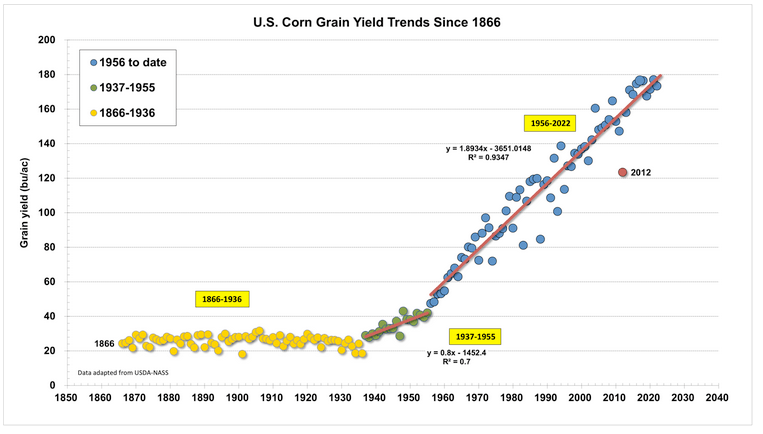
As the green revolution continued its march of progress, the prior research into alternate food systems began to die away. Little by little the funding began to dry up. The cattail flour research and its siblings became obsolete. Those who studied these plants at a professional capacity are now either retired or dead, and their knowledge exists as old photocopies in the back of research libraries and labs.
This is unfortunate, and should bring fear into our hearts. Because there are several facts we didn’t highlight before:
- Putting chemical fertilizer onto the ground may kill the microbes that feed crops
- About half of the food on earth is grown in a post green revolution model that depends on synthetic fertilizers.
- Sustainable fertilizer production is still in its infancy – no non-fossil fuel method has been adapted to mainstream production
- Half the nitrogen in your body comes from the burning of fossil fuels to produce ammonia
This means that if the fossil fuels are unavailable for fertilizer production, the conditions for farming fundamentally change, or we adapt our farming systems to be sustainable, global food supplies would drop rapidly.
We’ve spent all this text lining you up to absorb this fact – the so called obsolete research topics we abandoned a century ago could be methods of vital importance. So too could be the Indigenous food systems that operated (and continue to operate) outside of the existing industrial models of food production. The path of farming has been narrowed to one with high production, but high fragility – it depends on certain unsustainable chemicals, and erodes our ability to operate without them through soil damage.
Other ways
Open field agriculture with annual vegetables (corn, soybeans, rice, wheat, etc) have really stolen the show. But it has major downsides. Humans must mimic the work of floods, herds of buffalo, fires – landscape level effects that keep land open for those early pioneer crops have their space. Ask any farmer how easy the work is, especially without the aid of tractors and chemicals. Backbreaking labor is the norm.
It’s worth remembering that not all land naturally resembles the conditions people grow crops in. As we discussed before, depending on the unique bedrock and weather conditions soil may become more dominant in sand or clay. Typically these are undesired soils for gardening. Clay soil is dense and blocks the passage of water – annual crops with pathetic root systems usually wilt and die when growing in clay. Meanwhile sandy soil is fluffy and open, but water drains through almost immediately. That means the soil is often either wet or bone dry, and fertilizers wash away quickly. Plants in sandy soil usually die of thirst and hunger for nutrients.
There are also variations in other factors such as moisture that impact plants. When water stays in soil long enough, it changes the entire below-ground ecosystem. New microorganisms that live without oxygen begin to thrive in drowned conditions. Species that know how to either live without air or carry air with them become the dominant organisms. In very dry arid ecosystems like deserts, life can appear sparse. But species in these places focus on thriving in rains and hunkering down in the dry seasons. Open field garden veggies lack the skills to handle either wet or arid conditions.
When gardeners are faced with these unique landscape conditions, typical wisdom advises transforming the landscape to suit the needs of their vegetables:
- Clay soil – break up with deep rooted plants, and add lots of organic matter to fill the clay with open spots.
- Sandy soil – fill with organic matter to hold water and nutrients.
- Wet soil – drain with channels and plant water sucking plants to draw up the moisture.
- Arid soil – add and hold water longer with irrigation and valleys that can hold rainwater.
Notice that each of these steps involve tremendous labor in order to fundamentally transform the nature of the landscape. People are led to believe that any land that’s not fit for growing tomatoes is ‘poor’ in some way, and must be ‘improved’ and made ‘fertile’. Plus, this is just extra labor on top of the grueling work of open field agriculture. It’s a recipe for exhaustion!
But remember what we said before – each of these ecosystems contains unique species already adapted to those conditions! People around the world and throughout history have found ways to leverage the existing landscapes to suit their own needs. But these people were often seen as brutish because they lacked the civilizing forces of fields, and their methods ignored.
Working with native plants and using diverse methods of agriculture (many of which are traditional but now rare) can enable us to produce food with less energy devoted to the creation and maintenance of open farm fields, and while supporting the native ecosystems. There’s no need to transform a wetland into a corn field if you know how to grow food in mud!
Wetlands, Floodplains, and Paddies
As we described above, plants adapted to live in flooded soils are specially evolved to carry oxygen with them. This is typically done by making special air filled channels running up and down the plant called Aerenchyma that operate like snorkels. Garden veggies lack these structures and thus drown in waterlogged soils. But plenty of essential food plants (though many are less common in grocery stores) have these traits and thrive in wetlands.
Rice Paddies
The most well known wet method of farming is known as a paddy system. These are farm fields which are kept flooded for some or all of the growing season. The main food plants used in paddy systems are rice, and taro. Both of these plants are ‘facultative‘, meaning they can live in both wet or dry conditions. Facultative plants are well suited to paddy growing because the fields can be flooded or drained depending on the needs of the farmer. Paddy crops usually start as a dry field which is then flooded, kept flooded during the growing season,and then drained before harvest. These conditions maximize growing facultative plants because dry and wet soil specialists die as their environment is flooded and drained. Some farmers in North America have begun experimenting with paddy systems in crop fields now flooded more often due to climate change.
In South Asia rice is grown as a Kharif crop, which is a plant grown during the monsoon season. Monsoon rains keep paddy fields flooded without people having to bother with complex irrigation systems.
Camas and Hopniss
Paddies naturally mimic wetlands which are flooded for most of the year. Other wetland systems have flooding for part of the year, or only occasionally when rivers overflow. These drier conditions may or may not be classified as a wetland ecosystem depending on if the flooding is frequent enough to result in changes to the soil and plant communities.
Beavers often produce floodplain ecosystems with few trees – their dams flood out trees that are not adapted to grow in wetlands before draining, leaving wet open fields. These may transition between non-wetlands, into a wetland during the flood years, before slowly switching back into a non-wetland. Wetlands which don’t drain can sometimes begin to fill with moisture-adapted trees like the river birch which can survive several weeks of standing water, but it takes many years to become filled with mature woods again.
Humans can also maintain open landscapes that resemble beaver-created field by applying fire periodically.
Camas is one of the significant food plants of these wet open landscapes. Although species of the plant exist across North America, the people of the northwest have developed the deepest skills in their use and care of the camas beds. Many Salish-speaking nations have both historic and contemporary camas fields, often managed by flooding and fire, which families return to again and again to harvest bulbs. Roots are planted back during harvesting, which enables a sustainable agricultural system in a wild space.
The sweetness of camas is often remarked upon. This highlights one aspect of traditional foods often ignored – how delicious they are. Indigenous people recovering their traditions and those working alongside them, describe the caramel pear-like flavors of long-cooked camas. It’s easy for folks eating from grocery stores to assume that these dishes are old famine foods, instead of entire culinary traditions worth valuing and caring for as living culture.
Hopniss (Apios americana) similarly is a root vegetable, but has the deepest relationships with people in the eastern woodlands. Also called ground nut or earth pea, Apios are a perennial vining species of bean. They produce large underground tubers that are strung together like beads on a necklace. These tubers contain about three times the protein of a potato and can be dug up at any point in the year. When the root is broken into sections, each piece will grow into a new plant, making it easy to harvest, divide, and plant back to regrow. This pattern of harvest and replanting is common in the wild tending practices of this continent, as we also saw with Camas.
Hopniss loves moist soil. It’s typically found along river banks and lowlands, especially ones with a lot of sunlight where it can thrive. We’ve found remnant populations in wetlands taken over by invasive reeds – but also in garden beds near former Indigenous pathways and settlements where it’s fought by annoyed gardeners as it climbs in their roses.
As a member of the bean family, apios is able to fix nitrogen through root nodules. This makes it readily grow in even low-fertility environments. Cranberry bogs are naturally low-nitrogen and co-occur in hopniss territories. This has led annoyed cranberry farmers to note with great concern how heavy the weed pressure can be from these wild beans. Plowing and mixing the soil only makes things worse by breaking the tubers apart and therefore increasing the total number of plants. The prioritization of the cranberry as a single cash crop to be maximized has meant that this secondary historic staple crop is seen as a pest and waste product.
Historic records are difficult to find on Apios. The eastern peoples were removed from their lands before those further west during the earlier periods of the genocide. In our experience it has made the accounts of their plant use and landscape care methods harder to track down in the written online record, but we assume the oral histories are just as complete. This forcible displacement is evident in the stories we do have. Fleeing Indigenous peoples were tracked by colonists trying to murder them, by following the earth dug up for hopniss tubers. Although Apios was eaten at the first thanksgiving when members of the Wampanoag Nation rescued the pilgrims from starvation by sharing their own stored foods, laws in the colonies would later outlaw harvest of the roots by Indigenous people, with punishment by public whipping.
To this day the northern range appears to be composed of sterile variants of hopniss that cannot reproduce by seed. In the current landscape they spread incredibly slowly, as they can only move by growing tubers into the soil.
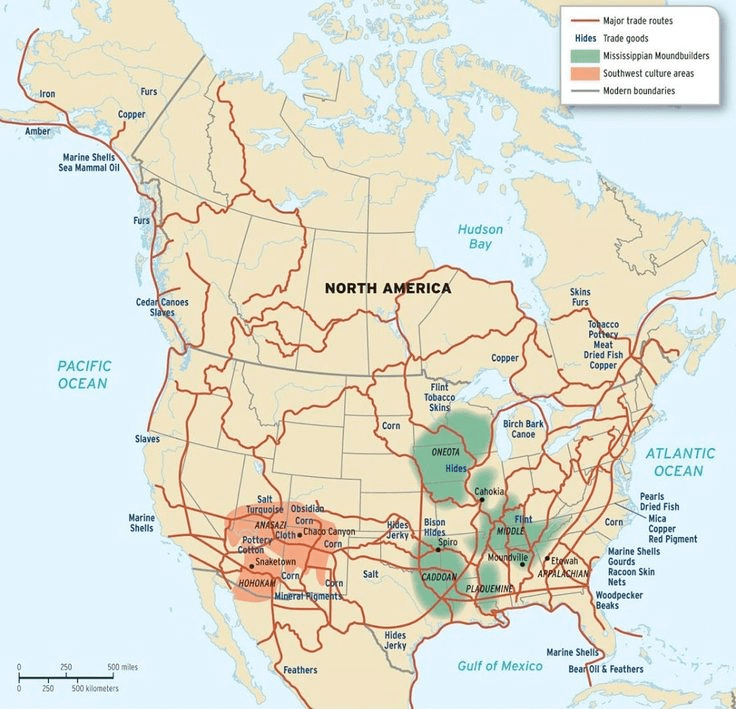
Notably there was a system transcontinental pathways used by people for millennia to travel distances short and long – a person could walk from ocean to ocean along the great paths. This pathway system has since been carved up by the political boundaries declared by the states, and destroyed and paved over to make the US highway system. One has to wonder how many of these northern hopniss tubers were spread by travelers of the pathways. It’s staggering to bear witness to how much generosity and ease has been eroded from the landscape.
Freshwater Tubers – Wapato, Lotus
In parts of North America where wetlands exist, people have historically used them as a major source of food. Wapato (also known by Katniss or Arrowhead) (Sagittaria latifolia) is a small flowering plant with nutritious tubers which both historically and in the present day is a vital food plant to the Indigenous nations. When Europeans first visited Indigenous settlements they described people walking into neck deep water to harvest Wapato and Lotus roots. Modern researchers have found that a wapato wetlands are suitable as staple crops to support communities, based on both historic lifeways of Indigenous cultures and current yield data.
We’ve found native lotus (Nelumbo lutea) to be another important food but less well referenced in internet sources compared to other plants. One account from the early 20th century via a non-Indigenous ethnobotanist describes the process used by people of the Pawnee Nation for harvesting the root tubers. People would walk along the lotus beds when waters lowered in late summer feeling for the tubers with their bare feet, they’d then scrape the mud away with their feet and use a hooked stick to pull up the roots. These would then be eaten, and some sliced into 1″ rings to dry for winter use. One source claims that some of the lotus beds of Iowa came from the Ho-Chunk people in the late 19th century, who brought the food plant with them as they were forcibly relocated from their homelands.
The lotus has an odd fragmented distribution on this continent. It’s also known to grow at an enormous pace – six plants filling an acre within a single growing season. East Asia has a similar climate and ecological community to eastern North America with often mirrored foodways, and a local species of lotus in China is part of a crop rotation in rice paddies. These points in combination with the Ho-Chunk account leads us to believe that the plant was intentionally moved by people into regional freshwater ponds for harvesting as an agricultural food crop. But actual oral histories and living examples would be the best source to confirm or deny this belief.
Manoomin
In the deep waters of the great lakes, Manoomin (also called wild rice / Zizania – but not closely related to grocery store rice) plays a role of profound religious and practical significance. The Anishanaabe people land extends around the great lakes, but their oral histories describe their original home as being the east coast. Their migration was the result of a prophesy from their elders saying to move westward to preserve their way of life, where food could be found growing on the water. Considering the central importance of this plant to the people of these nations, we’d prefer to let them speak for themselves on how their life ways are woven together with Manoomin. There are a number of great video interviews on youtube, and the Anishinaabek Caucus of the Michigan Democratic party have collected these links in a single place for easy viewing. There are also more practical resources like this Manoomin pamphlet from the Great Lakes Indian Fish and Wildlife Commission which organizes hunting and fishing rights on behalf of eleven Ojibwe tribe, and the G-WOW Ojibwe climate change education resource which has a page on Manoomin.
We’d also like to raise up the work of the White Earth Band who recognized the legal rights of the Manoomin plant, and are the first who brought those rights to a tribal court. Their work is protecting the waters and the ecosystems of the entire midwestern region. You can purchase sustainably harvested wild rice directly from the white earth band here.
Speaking just on the plant itself, wild rice grows in freshwater bodies of the east. Although it’s primarily known for the populations in the great lakes and smaller ponds and lakes of the northeast, there are species that extend down through Florida and Texas. Manoomin does not tolerate ocean salts, pollution, or fast-flowing water. It needs clean still waters. Harvests happen in the fall where a canoe can slip into the lake waters between the rice plants, and then the stalks are beaten to free the ripe seeds. These fall into the bottom of the canoe where they can later be processed on land. This processing is quite laborious and includes continuously stirring rice in a hot cook-pot, physically breaking the hulls off the grains, and winnowing the hulls away. It’s a demanding process, but one that sustains communities.
Manoomin’s presence as a food source in lake waters make it an excellent resource for people. Lakes – especially in the midwest – are enormous, unused for human housing and farming, and can be left mostly alone throughout the growing season to manage themselves (though it’s worth remembering that like all lands and waters, these areas are tended to to maintain health and productivity).
Although a much lower density calorie source compared to typical crops like corn, large rice waters can be quickly traversed and collected through canoes and skilled harvesters. This makes a ten acre rice water more like a one acre crop field on land in terms of human time and effort. Especially when we consider that open waters aren’t suitable for other crops, this makes rice a significant food asset in lake ecosystems.
Eastern Hardwood Nuts
Orchards and vineyards are widely adopted in the eastern US as an agricultural method without open fields. Generally they’re focused on high-value fruits and nuts like apples, almonds, grapes, pecans, and blueberries. However, we have many more food-producing woody plants than are used in modern orchard systems.
Oaks
The oak tree is of such deep importance it will be impossible for us to adequately describe their role. The tree is the center anchor of biodiversity wherever it occurs. Oaks on average live for almost a thousand years – growing for 300, mature for 300, and declining for 300 – and each stage provides for the surrounding ecosystem in different ways. Humans have always valued the oak for its sturdy fine wood – good for both construction and tools as well as heating. But less well known today is the importance of acorns to our ancestors and some people still living today.
The acorn has sustained people around the world for millennia. There are almost too many to list, from the Dahesas of spain, the acorn eaters of Akkadia, the Korean foraging traditions, and the central use by the Chumash and other nations of the west. Acorns are nutritionally similar to grains, and play a similar role in the cultures who use them as foods.
The oak tree does not bear every year, unlike the predictable yields of wheat or rice. Instead there is an unpredictable synchronization between oak trees, where they seemingly decide to produce an overabundance some years and little to none on others. This is known as masting. Explanations for this unpredictability include managing pests, responses to weather, and improving the cross-pollination between trees. Trying to predict masting cycles is an active topic of research with significance to forest management and potential agricultural use, but still remains an unsolved problem.
Acorns are a nut with a thin easily-cracked shell, but the actual seed inside is rich with bitter tannins (the same chemicals that make tea taste bitter) which can have negative health effects in significant quantities. The amount of tannins vary between species and individual trees. Generally speaking low-tannin (sometimes called ‘sweet’) acorns are more appealing to wildlife, and have historically been a more central food source to people. Higher tannin acorns are usually more abundant for human collection due to the lack of immediate attention from squirrels and other animals.
Tannins are ‘water soluble’ – that means that it can be washed away in water, a lot like salt. This is similar to olives which must be ‘cured’ to remove their tannins. Most methods of acorn processing therefore have involved grinding and then holding the acorns under moving water to rinse away the bitterness. The processing time varied based on both tannin levels and the amount of water being used – but typically takes hours or days to complete. Cooking by boiling or toasting is also not uncommon, as is nixtamalization (using strong basic solutions to break down chemical bonds), and brining in salt. All methods require time and patience, but can yield large quantities of flour that is similar to typical grain-flours we eat every day.
Oaks in the east fall into two main groups – the ‘white oaks’ and ‘red oaks’ (there are other smaller groups that are not common in the region). White oaks have leaves with rounded edges, take a single year to produce acorns which generally have lower tannins, drop early in the season (often in the late summer), and germinate a few weeks after falling. They usually trigger a feeding frenzy in the woods – being eaten by nearly anything that has a mouth big enough to fit an acorn inside. Red oaks meanwhile have spiky-edged leaves, take two years to produce more tannic acorns that drop later in the season (some falling in the late autumn and early winter), and don’t germinate and begin growing until the spring. These can sometimes litter the forest floor and only begin getting picked off when other food sources dwindle.
There is an orchestra of oaks in the forests, where each species plays their note at their set time. With the chestnut oak in the white oak group often dropping their acorns several weeks before other species, and the northern red oak sometimes arriving almost months later. The weather, latitude, and other factors modulate these drop times – so they’re ultimately unique to each woodland and each season.
Hickories
Hickories are a common sister tree in oak woodlands. Their shared woodlands are known as Oak-Hickory forests and are the most widespread of the forest types in both eastern and central North America. Archeological evidence shows that people have been collecting and storing acorns and hickory nuts for millennia. One notable dig site showed over 13,000 hickory nuts piled in a storage pit during the Late Archaic period (around 3,000-5,000 years ago).
Unlike oaks, hickory nuts do not require special processing. They are sweet and delicious and can be eaten right out of their shells. The most well known hickory species is the Pecan (which is the only species in the group which has been widely adopted as an orchard species) but the wild hickory species outside of cultivation are considered by some to the best tasting nuts in the world. The taste and use varies by tree – the bitternut being most useful as an oil (the nut flesh being too bitter to eat directly), shellbark as the largest and sweetest, shagbarks the most easy to crack, and so forth.
Among the Cherokee people, Kanuchi is a traditional food made of smashed hickory nuts boiled into a rich milk, often with a starch like rice or grits. This is one of the best ways to enjoy hickory nuts. In our household we pass the milk through a blender and add maple syrup for a comforting winter drink similar to milky hot chocolate or warm horchata.
Groups such as the Northern Nut Growers Association have been developing new hybrids and varieties of hickory, which members have been growing and putting out for sale. These types are selected for characteristics such as cold tolerance, shell thickness (thinner is better), sweetness, and size of nut.
Chestnut
The American Chestnut used to be a common feature in the northeastern portions of the oak-hickory forests, these were called ‘oak-hickory-chestnut forests’. These enormous canopy trees were sometimes called the redwoods of the east, as they were the tallest members of their forest community – averaging 100′ tall, and 5′ wide. Unfortunately the tree became functionally extinct in the early 1900’s as the chestnut blight spread from imported Japanese chestnuts.
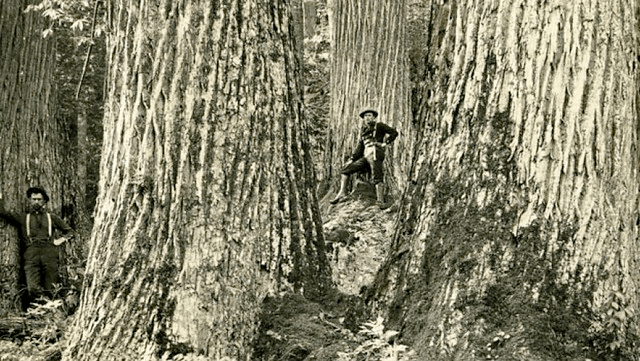
Like the hickory and oak, chestnuts were central to regional food cultures. The Indigenous Nations all have unique names and relationships with the trees. The settlers heavily relied on Chestnuts as a food source up until its extinction, with reports of railroad cars overflowing with chestnuts destined for city consumers.
Unlike the oak and hickory, the nuts of the chestnut family require virtually no processing. They have thin shells like the acorns and can be eaten fresh like the hickory nut. After the prickly burr is carefully peeled away, stepping on a nut is enough to crack the shell open and the flesh easily picked out. Although not required before eating, roasting chestnuts is a continued practice to concentrate the sugars into a sweet caramelized treat.
People have been trying to restore the chestnut through a range of strategies. Some are using genetic modifications, while others are using breeding programs. Some folks grow the European or Asian chestnuts as a functional replacement for the tree. Their argument is that the existence of the chestnut genus on the landscape, with similar sized nuts – is important for wildlife and provides great value to people.
A remaining native species in the chestnut family known as the Chinquapin is still present in the landscape. The chestnut tree was decimated by the blight because it kills the tree’s above-ground growth. Chinquapins have an advantage because they are small shrub-like trees, and when blight takes down a large stem they can still recover. New limbs and stems are sent from the ground and they proceed growing.
Chinquapins have small nuts – once peeled they’re around the size of a peanut. This historically made them less central in focus than the chestnut in terms of economic focus and cultural lifeways. But their continued existence in the landscape highlights their unique value.
Beech
The Beech tree grows in different habitats than the other trees mentioned so far. As it’s not able to withstand fire, it’s commonly found with other shady fire-intolerant species like maple and birch. They also trend much further north spanning well into Canada.
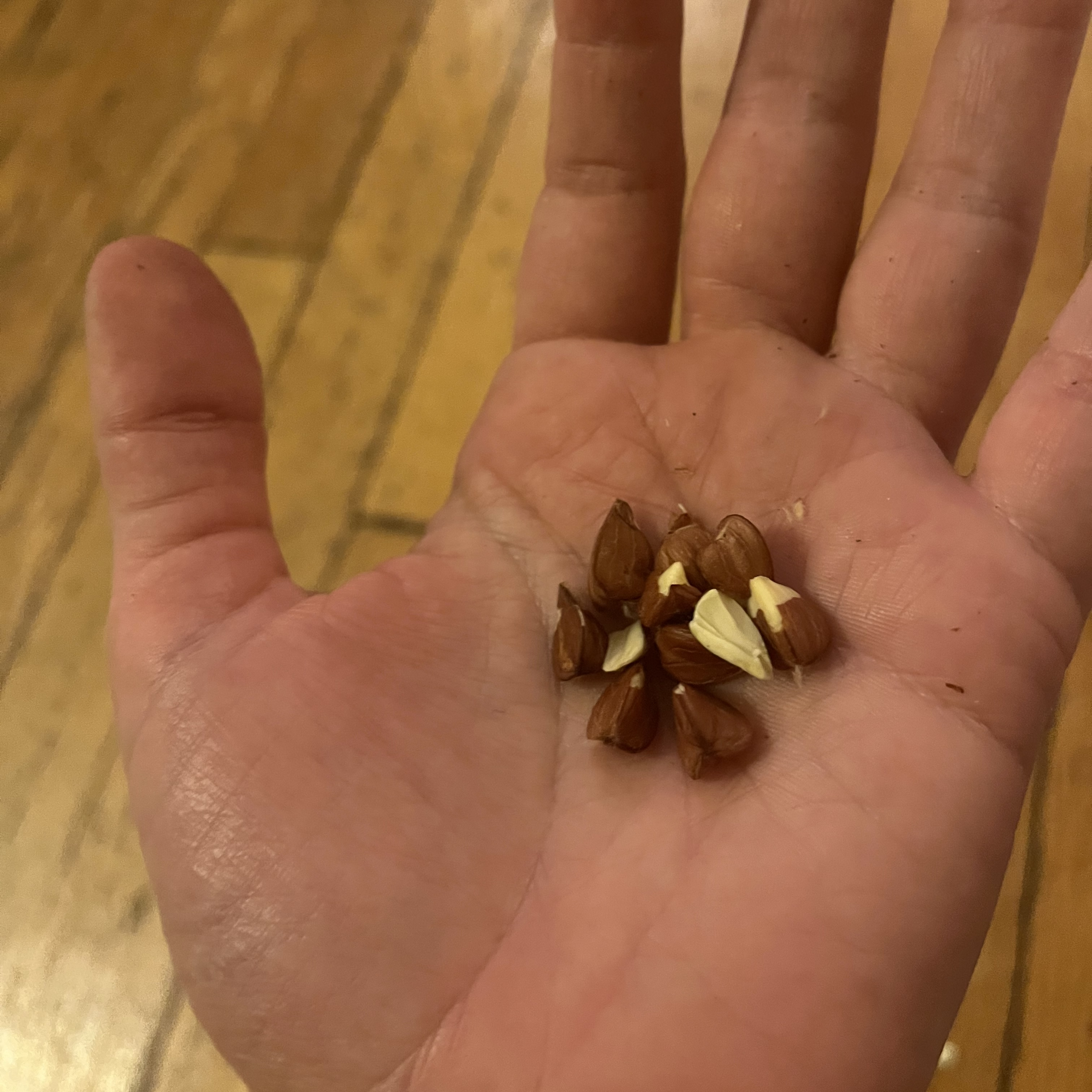
Beech produce small nuts about the size of a sunflower seed. These are commonly nabbed by squirrels and other critters that can reach the canopy and pick off the small nuts. They’re much harder for us two-legged animals on the ground to harvest, but you can sometimes pick them off from lower-handing limbs. Their taste is mild – similar to a pecan – but without significant flavor.
There’s minimal information we could find on yields of beech trees. Some sources claim that they begin producing at 40 and hit peak production at 60. In Europe their local species are mentioned as a food source used during their war-era famines. There is ample interviews on record attesting to the use of beech nuts by Indigenous people on this continent, but less available on-line for how they’re currently used today. The nuts are definitely not a major part of the broader American foodways as we know them.
Unfortunately the beech is currently undergoing a fatal blight known as beech leaf disease, and may vanish from the landscape entirely in a few decades. Many people don’t realize they’re currently living through a landscape transformation similar to the loss of the chestnut a century ago.
Timing, Harvests, and Growth
Open field agriculture has a lot of convenience behind it. Plants take months to mature and harvest, and their yield are dependable. Nut trees and shrubs meanwhile have long lead times and a lot of fluctuations in production.
Oaks and hickories in particular take a long time to grow – their maturation rate is slower than nearly all other food-producing trees. Oaks in particular are long and slow lived. Their thousand-year lifespan balanced by their long childhood – oaks typically begin bearing acorns at about twenty years old, and their peak production is usually at age 50, and trending down after 80. Hickories are similar to oaks in that they reach peak production at around 50, but they don’t slow down. Instead of a thousand years, they only live a few centuries – but they can be continually productive for that entire lifespan once they reach maturity.
We don’t have nearly as much data on the American Chestnut, but we know they bore food much sooner – around a decade or so. This is also true of the Chinese chestnut – which begins bearing within only a few years, and reaches peak production in a few decades. Although the lifespan is often cited as around a century, some trees in China have been found to be over 800 years old. The chinquapin meanwhile lives less than 50 years old, but reaches peak production in 5.
Similar to the oak, hickory nuts have masting cycles. Some studies seem to suggest they may be on a three year cycle – no nuts, some nuts, a lot of nuts, and then back to none – but there’s not high quality data to back them up. Because these cycles are not tied to the oak
In the range of the American Chestnut, there was further protection against bad mast years. Unlike the cyclical oaks and hickories, chestnuts provided a smaller but consistent food source – yielding every single year. This in additional to their thin shells, provided a continual accessible food source to wildlife and people.
Wild nut yields vary year to year, but our calculations based on existing data indicates that on masting years they are comparable to many agricultural crops in terms of calories produced – similar to rutabaga, carrots, and sorghum. That means oak hickory woodlands can be seen as periodic bumper crop sources of hearty food. These yields are major assets in agricultural production, considering the low effort involved in oak management compared to the backbreaking labor of the farm field. Some sources believe that the switch from oaks and other tree crops to annual agriculture may have began as a way to balance out food resources on non-masting years. Notably this is the reverse of what we see now – many people view wild nuts as backup famine food, and veggie crops as the mainstay of our diets.
 Thriving in Scarcity : A book about living well in hard times
Leave a comment